The single plane golf swing uses one axis for the swing path, while a two-plane swing utilizes two different angles during the backswing and downswing. The single plane swing often leads to easier consistency, whereas the two-plane provides more power but requires greater coordination.
Grasping the mechanics of golf swings proves crucial for players aiming to refine their game. A single plane golf swing simplifies the motion, advocating a ‘one-plane’ approach where the arms and shoulders rotate around a single, flat axis. Conversely, a two-plane swing demands the golfer to shift planes between the backswing and downswing, creating a steeper angle and energizing the shot with more force.
This dichotomy presents players with a strategic choice: adopt the minimalist single plane for a steady, repeatable technique, or master the dynamic two-plane for an explosive, albeit complex, stroke. Both styles necessitate practice and comprehension, influencing a golfer’s performance and style on the course.
The Quest For The Perfect Golf Swing
In the game of golf, mastery comes with the perfect swing. Every golfer dreams of that effortlessly fluid motion that sends the ball flying straight to its intended target. The journey to perfecting the golf swing is a continuous adventure, filled with nuanced techniques and personal style choices—one of the most significant being whether to adopt a single plane or two plane golf swing.
Searching For Consistency
Finding a repeatable swing is key for any golfer looking to improve their game. The twin peaks of single plane and two plane golf swings represent distinct paths to achieving consistency:
- Single Plane Swing: Characterized by a single motion plane from backswing to follow-through, it simplifies the movement and can lead to greater repetition.
- Two Plane Swing: Involves a more complex transition, with the arms and shoulders moving on different planes. This can potentially offer better control for skilled golfers.
Evolving Techniques
The art of golfing embraces change as players continually evolve their swings. Here’s a glance at how both techniques shape a golfer’s playstyle:
| Swing Type | Characteristics | Common Traits |
|---|---|---|
| Single Plane | Simplifies timing and movement | Reduced rotational movement |
| Two Plane | Greater distinction between backswing and downswing | Increased control for experienced players |
Personal preference, body type, and skill level play vital roles in selecting the ideal swing technique. Both single and two plane swings continuously adapt as new insights emerge from golf’s dynamic landscape.
Basics Of The Golf Swing
The basics of the golf swing form the foundation for any golfer looking to improve their game. Whether you’re a beginner or an experienced player, understanding the difference between a single plane and two plane golf swing is crucial. Let’s explore the grip and posture necessary for both swings, and the swing mechanics that differentiate them.
Grip And Posture
A proper grip sets the stage for a successful golf swing. It influences the swing path and the clubface position at impact. Two main grips exist:
- Overlap Grip: Fingers interlock slightly for a firm hold.
- Interlock Grip: Pinky finger and index finger intertwine for a secure fit.
Posture impacts balance and swing dynamics. Essential posture tips include:
- Keep your back straight, but relaxed.
- Bend at the hips, not the waist.
- Balance weight on the balls of your feet.
Swing Mechanics
The mechanics of a golf swing dictate the motion and path of the club. Here’s a comparison between single and two-plane swings:
| Single Plane Swing | Two Plane Swing |
|---|---|
| Club moves on a single plane. | Club shifts between two distinct planes. |
| Simpler, more repetitive motion. | Requires precise timing and rhythm. |
| Ideal for consistent ball striking. | Allows for more power and adaptability. |
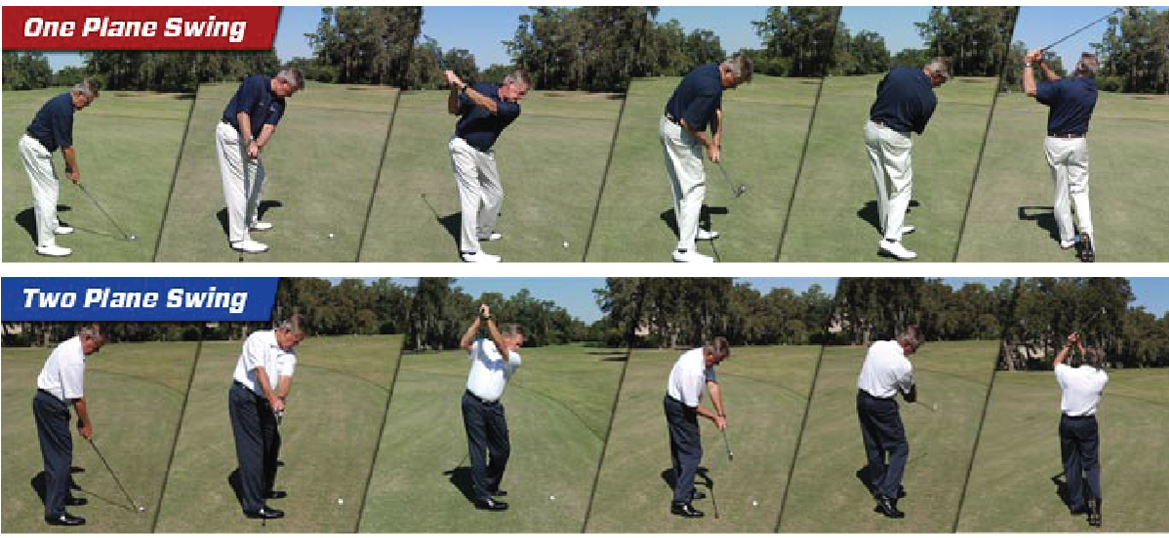
In the single plane swing, the golfer’s arms and shoulders form a straight line to the club head. This consistent path simplifies the swing. Two plane swings involve a more complex movement, with a distinctive shift in plane from backswing to downswing, which can generate greater power.
Inspecting The Single Plane Swing
Let’s take a closer look at the Single Plane Swing, a concept that has captivated many golfers. This technique hinges on the idea of simplicity. The goal is to keep the club on a single plane throughout the swing. The simplicity can lead to more consistent outcomes. Now, we’ll delve into the specifics of what makes the Single Plane Swing distinctive, its benefits, and possible drawbacks.
Characteristics
- Arm and Shoulder Alignment: The golfer’s arms and shoulders align on a single plane.
- Club Path: Club travels along the same path during the backswing and the downswing.
- Less Movement: It involves fewer variables in motion, making the swing more repeatable.
- Body Rotation: Golfers rely more on body rotation, reducing wrist and hand action.
Pros And Cons
| Pros | Cons |
|---|---|
|
|
A Single Plane Swing simplifies the movement, enhancing consistency and control for golfers. This can lead to better accuracy on the course. Though it might limit power for some, the trade-off often results in a more reliable game.

Credit: m.youtube.com
Exploring The Two Plane Swing
Exploring the Two Plane Swing in golf opens a world of precision and power for many players. Understanding the fundamental differences can substantially affect a golfer’s game. Here’s an in-depth look at the defining features, advantages, and potential drawbacks of the two plane swing.
Defining Features
The two plane golf swing is known for its distinct upper and lower body movement separation. In this technique, a golfer’s arms swing on a different plane compared to the rotation of the shoulders. This creates two planes of motion during the swing. The arms move up and down vertically while the shoulders remain on a horizontal axis.
- Arms swing on a vertical plane
- Shoulders rotate on a horizontal plane
- Swing resembles a loop
Advantages And Drawbacks
The two plane swing offers various advantages:
| Advantages of Two Plane Swing |
|---|
| Increased control over ball flight |
| Better accuracy for skilled players |
| Potential for increased swing speed |
However, this swing method also has some drawbacks:
- Complexity can be a challenge for beginners
- Requires consistent practice to master
- Can lead to timing issues if not executed well
Choosing between a single plane or two plane golf swing often depends on a player’s natural style, body type, and comfort. Each golfer must decide which swing provides the optimal balance of control, power, and consistency for their game.
Notable Golfers And Their Choices
Notable golfers throughout history have made their mark by mastering either the single plane or two plane golf swing. Each technique has its own set of legendary advocates. These golfers have not only excelled in their game but also influenced generations to follow their lead. Let’s explore who swears by each method and why.
Single Plane Pros
The single plane golf swing is about simplicity. Golfers keep the club on the same plane during the backswing and the downswing. This method can lead to a consistent and repeatable motion. Notable single plane swingers include the renowned Moe Norman and Bryson DeChambeau. They favor a more direct path to the ball and believe in the swing’s efficiency.
- Moe Norman: Known for his precision and accuracy.
- Bryson DeChambeau: Combines single plane swing with a scientific approach.
Two Plane Champions
In contrast, the two plane swing separates the backswing plane from the downswing plane. It allows golfers to generate more power by incorporating their shoulders and hips. Golf legends such as Jack Nicklaus and Tiger Woods have dominated the greens with this approach. They exploit the two planes for greater distance and dynamic shot making.
- Jack Nicklaus: Used his powerful two plane swing to win 18 major championships.
- Tiger Woods: Known for his explosive power and control.
The Impact On Performance
Mastering the right golf swing is essential for your game. Single plane and two plane swings impact performance. Golf swings affect how you hit the ball. We will explore how each swing affects accuracy and power. You will learn about consistency in play.
Accuracy Versus Power
The single plane golf swing is known for its accuracy. It uses one motion. Your arms and shoulders move together. This makes hitting the target easier. Golfers get straighter shots often.
The two plane golf swing offers more power. It has two different motions. Golfers create higher speed with their hands and arms. This leads to longer shots. Power hitters prefer this type.
| Swing Type | Accuracy | Power |
|---|---|---|
| Single Plane | High | Lower than Two Plane |
| Two Plane | Variable | High |
Consistency In Play
With the single plane swing, golfers enjoy consistent play. It is simpler to repeat. This makes it great for beginners. It leads to more predictable shots.
The two plane swing can be less consistent. It has complex motions. Golfers must practice a lot. With dedication, it can be reliable. High-skill golfers like this challenge.
- Single Plane: Easier to master, better for routine shots.
- Two Plane: Needs more practice, but yields dynamic shots.
Choosing Your Swing Style
Choosing Your Swing Style is a critical step in shaping your golf game. Know the key differences between a Single Plane and Two Plane Golf Swing. Both have unique mechanics. Your body type, flexibility, and goals in golf should guide your choice. Let’s explore and find the one that caters to your playing style.
Physical Considerations
Selecting a swing that complements your body is essential. Consider these elements:
- Flexibility: A Two Plane Swing might suit those less flexible.
- Body Type: Leaner players may prefer the Single Plane Swing.
- Physical Strength: Stronger players often excel with a Two Plane Swing.
- Height: Taller individuals might find the Single Plane Swing more comfortable.
Understand your physical capabilities. They significantly influence your swing choice.
Alignment With Playing Goals
Next, tailor your swing to your golfing ambitions:
- Determine your skill level. Beginners may start with a simpler Single Plane Swing.
- Consider the precision offered by the Two Plane Swing for advanced control.
- Assess your need for distance. Single Plane Swings can provide that extra boost.
- Think about consistency. A Single Plane Swing often offers steady results.
Align your swing style with your goals to maximize your performance on the course.
Improving Your Swing Technique
For golf enthusiasts keen on honing their skills, understanding the nuances between a single plane and a two plane golf swing is crucial. This distinction influences how a golfer controls their body movement, club alignment, and power generation. Improving your swing technique can lead to more consistency and accuracy, reducing scores and enhancing overall gameplay. Let’s dissect some practical steps to refine your swing.
Practice Drills
To solidify the mechanics of your chosen swing path, drills are indispensable. Consistent practice builds muscle memory and confidence.
- For Single Plane Swing:
- Mirror Drill – Rehearse your swing in front of a mirror to ensure alignment.
- Alignment Stick Drill – Use sticks to maintain a single plane throughout your swing.
- For Two Plane Swing:
- Backswing Check – Pause at the top of your backswing to confirm plane separation.
- Clubhead Path Drill – Practice guiding the clubhead on a two-plane motion.
Incorporating Flexibility And Strength
Flexibility and strength play pivotal roles in executing both single and two plane swings effectively. Enhanced flexibility results in a fuller range of motion while strength contributes to stability and power.
| Aspect | Benefits | Exercises |
|---|---|---|
| Flexibility | Improves motion range, reduces injury risk | Yoga, stretching routines |
| Strength | Boosts power, augments stability | Weight training, resistance bands |
Equipment That Complements Your Swing
Equipment That Complements Your Swing is vital in golfing. Choosing equipment can make a big difference in how you play. Whether you have a single plane or two plane golf swing, the right tools help. This includes clubs and golf balls suited for your swing style.
Selecting The Right Clubs
The club set you choose impacts your performance. With a single plane swing, you aim for consistency and less wrist movement. Clubs with less offset and a flatter lie angle are ideal. For a two plane swing, which has more body rotation, look for clubs with more forgiveness and a higher lie angle. Below is a quick guide:
| Swing Type | Club Feature | Benefit |
|---|---|---|
| Single Plane | Less Offset, Flatter Lie | Better Consistency |
| Two Plane | More Forgiveness, Higher Lie | Supports Rotation |
The Role Of Golf Ball Design
The golf ball is just as important as the club. For single plane swings, you want low spin golf balls. These travel straighter and reduce the chance of slicing. For two plane swings, choose high spin balls. These provide better control and improve shot-shaping. The list below highlights the key features:
- Single Plane Swing – Opt for low spin balls
- Two Plane Swing – Choose high spin balls
Credit: www.planetruthgolf.com
Learning From The Pros
Many golf enthusiasts turn to watching the pros to improve their game. They wonder: single plane or two plane golf swings – which one is better? Each professional has a distinct technique worth studying. This understanding could be game-changing for your own approach on the links.
Analyzing Pro Techniques
Watching the masters at work offers valuable insights. Legendary swings of pros like Tiger Woods and Rory McIlroy show mastery in motion. Tiger uses a single plane swing, moving his hands in line with the club head through the swing. Rory’s two plane swing separates arms and shoulders, creating different motion planes.
- Single plane swings keep simplicity and consistency.
- Two plane swings maximize power and control.
Breaking down their techniques highlight key elements you can integrate into your play. Notice their posture, grip, and the smoothness of their swings.
Training With Advanced Technology
Modern golfers have a major advantage – high-tech training aids. These tools provide data on every swing nuance. You can use simulators, swing analyzers, and video feedback to refine your technique. These tools capture every detail from swing speed to ball trajectory.
Measure your progress accurately with these technologies. Mimic the pros and see how your single or two plane swing measures up. Remember, even subtle adjustments can lead to significant improvements on the course. Use technology to train smarter, not harder.
Post Disclaimer
The information contained in this post is for general information purposes only. The information is provided by What is the Difference between Single Plane And Two Plane Golf Swing? and while we endeavour to keep the information up to date and correct, we make no representations or warranties of any kind, express or implied, about the completeness, accuracy, reliability, suitability or availability with respect to the website or the information, products, services, or related graphics contained on the post for any purpose. For any copyright related requests, please write to us on our contacts page.