

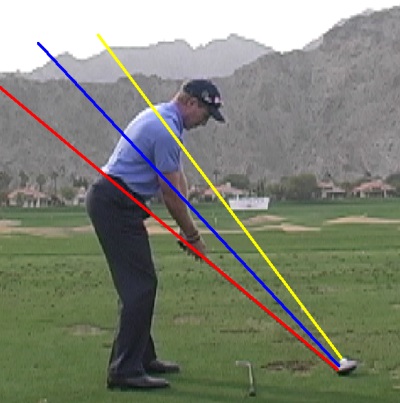
Understanding golf swing plane is crucial for consistency and accuracy in your shots. The swing plane refers to the imaginary surface that your club travels on during the swing, influencing the path of the clubhead at impact.
It is essential to maintain the correct swing plane throughout your swing to achieve optimal ball contact and trajectory. By simplifying the concept of swing plane, you can enhance your overall performance on the golf course. Let’s delve deeper into the fundamentals of golf swing plane and how you can improve your game by mastering this aspect of your technique.
Credit: theartofsimplegolf.com
The Fundamentals Of A Golf Swing
The Fundamentals of a Golf Swing are crucial for every golfer to master. Understanding the basic elements of a golf swing, such as grip and posture, stance and alignment, can significantly improve your game. In this article, we will simplify the concept of golf swing plane, focusing on these essential components.
Grip And Posture
The grip and posture are fundamental aspects of a golfer’s setup. Proper grip ensures control and power, while correct posture maintains balance and stability. When gripping the club, the hands should be placed in a neutral position, and the posture should be athletic, with a slight bend at the waist.
Stance And Alignment
Stance and alignment play a crucial role in determining the direction and accuracy of your shots. Stance refers to the position of your feet, which should be shoulder-width apart, allowing for a stable base. Alignment involves positioning your body and club in relation to the target, ensuring that the clubface is square to the target line.

Credit: theartofsimplegolf.com
Swing Plane Basics
Understanding the basics of Swing Plane is essential for improving your golf game. Let’s delve into the Definition of Swing Plane and Why It Matters.
Definition Of Swing Plane
A Swing Plane is the imaginary plane in which the golf club should ideally travel during the swing.
Why It Matters
Understanding and maintaining the correct Swing Plane is crucial for consistency and accuracy in your shots.
Identifying Your Swing Plane
Discovering your swing plane is essential in golf for consistent shots. Simplify your game with the Golf Swing Plane Simplified technique. Master your swing for improved performance on the course.
Identifying your swing plane is crucial to improving your golf game. The swing plane refers to the path that the clubhead follows when swinging the golf club. The ideal swing plane is a tilted circle around your body, allowing you to hit the ball squarely and straight.
Using Video Analysis
One effective way to identify your swing plane is through video analysis. Recording your swing from different angles and reviewing the footage in slow motion can help you see where your swing plane may be off. You can also compare your swing to professional golfers to see how your swing plane differs.
Common Signs Of Off-plane Swings
There are a few common signs that your swing plane may be off. One is consistently hitting the ball to the right or left of your target. Another is hitting the ball too high or too low. You may also feel like you are swinging around your body instead of on a tilted circle. Addressing these issues can improve your swing plane and ultimately your golf game. To identify your swing plane, use video analysis, and look for common signs of off-plane swings such as hitting the ball too high or too low. By addressing these issues, you can improve your swing plane, leading to better shots and ultimately a better game.
The Role Of Equipment
When it comes to improving your golf swing plane, understanding the role of equipment is crucial. The right clubs can make a significant difference in your swing mechanics and overall performance. In this section, we will explore the importance of choosing the right clubs and the impact of club length and flex on your swing.
Choosing The Right Clubs
Choosing the right clubs is the foundation for developing a consistent and effective golf swing plane. Each club in your bag has a specific purpose and is designed to achieve different distances and trajectories. By selecting clubs that suit your swing style and skill level, you can optimize your swing plane and enhance your overall game. When considering club selection, it’s essential to evaluate factors such as clubhead design, shaft material, and grip size. The clubhead design influences the club’s forgiveness and playability, while the shaft material affects its flexibility and responsiveness. Additionally, the grip size should be comfortable and secure, allowing you to maintain a proper grip throughout your swing.
Impact Of Club Length And Flex
The length and flex of your clubs directly impact your golf swing plane. The length of the club determines the distance between you and the ball, affecting your posture and swing mechanics. For example, if your clubs are too long, you may need to hunch over the ball, leading to an improper swing plane. On the other hand, clubs that are too short can cause you to stand too upright, resulting in a shallow swing plane. Club flex refers to the amount of bend in the shaft during the swing. It influences the timing and release of the clubhead, affecting the trajectory and accuracy of your shots. A general rule of thumb is that players with slower swing speeds may benefit from clubs with more flex, while those with faster swing speeds may require stiffer shafts for better control. Understanding the impact of club length and flex on your swing plane allows you to make informed decisions when selecting your equipment. It’s advisable to consult with a professional club fitter or golf instructor who can analyze your swing and provide personalized recommendations based on your individual needs.
Drills To Improve Your Swing Plane
Improving your golf swing plane is essential for a consistent and powerful swing. By using specific drills, you can refine your technique and enhance your overall performance on the course. Let’s explore some effective drills to help you improve your swing plane.
Mirror Drill
Utilize a full-length mirror to observe and adjust your swing plane. Stand in front of the mirror and take practice swings while focusing on maintaining a smooth and on-plane motion. Check your reflection to ensure that your club follows a proper path throughout the swing.
Alignment Stick Drill
Place an alignment stick along the target line to visualize the correct swing plane. Start your backswing and ensure that the clubhead stays parallel to the alignment stick. This drill helps you develop a consistent swing path and promotes better ball striking.
Common Mistakes And How To Fix Them
When it comes to improving your golf swing, understanding common mistakes and how to fix them is crucial for better performance.
Over The Top
Swinging over the top leads to slices. To fix this, focus on initiating the downswing with your lower body.
Flat Swing Plane
A flat swing plane causes inconsistency. Correct it by maintaining a proper shoulder turn during the backswing.
Advanced Techniques
Discover advanced techniques to simplify your golf swing plane. Learn proven methods to enhance your swing for improved accuracy and distance. Master the art of a simplified swing plane for a more consistent and effective golf game.
When it comes to golf, mastering the swing plane is crucial to achieving a consistent and accurate shot. While a basic understanding of the swing plane is important, advanced techniques can take your game to the next level. In this post, we will explore two advanced techniques for improving your golf swing plane: Adjusting Swing Plane for Different Shots and Incorporating Body Rotation.
Adjusting Swing Plane For Different Shots
To make the most out of your golf swing, you need to adjust your swing plane for different shots. For example, if you are hitting a driver, you should have a flatter swing plane to maximize distance. On the other hand, if you are hitting a pitching wedge, you should have a steeper swing plane to control the ball’s trajectory. To adjust your swing plane, you need to change the angle of your shoulders and the position of your hands during the swing. Here are some tips for adjusting your swing plane for different shots:
- For a driver, tilt your spine slightly away from the target and position your hands slightly behind the ball at address.
- For a pitching wedge, stand more upright and position your hands slightly ahead of the ball at address.
- Practice hitting different shots with different swing planes to get a feel for how your body should be positioned.
Incorporating Body Rotation
Another advanced technique for improving your golf swing plane is incorporating body rotation. Body rotation refers to the turning of your torso during the swing, and it is essential for generating power and accuracy. By incorporating body rotation, you can improve your swing plane and hit the ball farther and straighter. Here are some tips for incorporating body rotation into your golf swing:
- Start your backswing by turning your shoulders away from the target.
- As you reach the top of your backswing, turn your hips and torso to create a coiled position.
- Start your downswing by turning your hips and torso back towards the target.
- As you approach impact, turn your hips and torso through the shot to generate power and accuracy.
- Practice incorporating body rotation into your swing by hitting balls with a focus on turning your torso and hips.
In conclusion, adjusting your swing plane for different shots and incorporating body rotation are two advanced techniques that can take your golf game to the next level. By practicing these techniques, you can improve your swing plane, generate more power, and hit the ball farther and straighter.
Maintaining Consistency
Maintaining consistency in your golf swing plane is crucial for improved performance. Simplify your technique with our expert tips and achieve greater accuracy and distance in your shots.
Maintaining Consistency is the key to a successful golf swing plane. As a golfer, it is essential to develop a consistent swing plane that will help you achieve maximum accuracy and distance. In this section, we will discuss some effective ways to maintain consistency in your golf swing plane.
Routine Practice
Practice makes perfect, and this is especially true in golf. Routine practice is essential to maintaining consistency in your golf swing plane. Set aside some time each week to practice your swing, and stick to a consistent routine. This will help you develop muscle memory and improve your swing mechanics. Consider hiring a golf coach to help you develop a practice routine that is tailored to your specific needs.
Mental Approach
Your mental approach is just as important as your physical approach when it comes to maintaining consistency in your golf swing plane. Stay focused and positive during your swing, and avoid distractions. Visualize your swing before you take your shot, and trust your instincts. Remember to breathe and stay relaxed throughout your swing. A calm and positive mental approach will help you maintain consistency in your golf swing plane.
Summary
Maintaining consistency in your golf swing plane is essential to achieving success on the golf course. By developing a routine practice and a positive mental approach, you can improve your swing mechanics and develop muscle memory. Remember to stay focused, positive, and relaxed throughout your swing, and trust your instincts. With consistent practice and a positive mental approach, you can maintain a consistent golf swing plane and improve your game.

Credit: www.youtube.com
Frequently Asked Questions
What Is The Golf Swing Plane?
The golf swing plane refers to the imaginary surface where the club should ideally travel during the swing. It is crucial for achieving consistent and accurate shots. Understanding and maintaining the correct swing plane can significantly improve your game.
How Do I Find My Ideal Golf Swing Plane?
To find your ideal golf swing plane, start by addressing your stance and posture. Then, focus on the club’s path during the swing, ensuring it stays on the correct plane. Seeking guidance from a golf professional can also help you identify and refine your ideal swing plane.
Why Is The Golf Swing Plane Important?
The golf swing plane is important because it directly impacts the accuracy, distance, and consistency of your shots. By mastering the proper swing plane, you can enhance your overall performance on the course and reduce the likelihood of mishits or slices.
Conclusion
To sum it up, understanding the golf swing plane is crucial for improving your game. By focusing on the correct path and angle of your swing, you can achieve more consistency and accuracy in your shots. Remember to practice proper body alignment, maintain a relaxed grip, and work on your tempo.
With these key elements in mind, you’ll be well on your way to mastering the golf swing plane and experiencing better results on the course. Happy golfing!
Post Disclaimer
The information contained in this post is for general information purposes only. The information is provided by Golf Swing Plane Simplified and while we endeavour to keep the information up to date and correct, we make no representations or warranties of any kind, express or implied, about the completeness, accuracy, reliability, suitability or availability with respect to the website or the information, products, services, or related graphics contained on the post for any purpose. For any copyright related requests, please write to us on our contacts page.


